
If your skin feels drier the moment winter arrives, you are not imagining it. Winter has a very real effect on the way the skin holds onto moisture, and it impacts people of all ages, though the shift can feel stronger in midlife.
Understanding why this happens is the first step in supporting your skin and helping it stay calm, hydrated and comfortable through the colder months.
Why winter steals moisture from the skin
Winter brings together several environmental changes that make it harder for the skin to stay hydrated. Each one is small on its own, but together they create the perfect conditions for dryness.
1. The air holds less moisture
Cold air simply cannot retain as much humidity as warm air. When humidity drops, the air starts pulling water from the nearest available source. Unfortunately, that source is often your skin.
This is why your skin may feel tight or papery even if you have not changed your routine.
2. Central heating speeds up moisture loss
Indoor heating warms the air but dries it out even further. The constant switch between cold outdoor air and warm indoor air makes it hard for your skin to stabilise.
This rapid movement of moisture out of the skin is called transepidermal water loss, and it increases dramatically in winter.
3. Your skin barrier becomes more fragile
Your barrier is made of lipids that hold the skin cells together. In winter these lipids can become more brittle. When the barrier weakens, moisture escapes more easily and irritants enter more quickly.
This leads to visible changes such as flakiness, dullness and that tight feeling after cleansing.
4. Hot showers and baths strip natural oils
They feel incredible on cold days, but hot water dissolves your skin’s natural oils, which are essential for trapping moisture.
A few minutes too long under hot water is often enough to trigger dryness that lasts all day.
How to slow down winter moisture loss
The goal in winter is not just adding hydration. It is helping your skin hold onto it. Small changes can have a surprisingly big impact on how your skin feels.
-
Strengthen the skin barrier
When the barrier is supported, the skin retains water more effectively and becomes less reactive to the cold.
Look for ingredients that nourish the barrier and help reinforce its natural structure. This gives the skin the resilience it needs in winter.
-
Add richer evening care
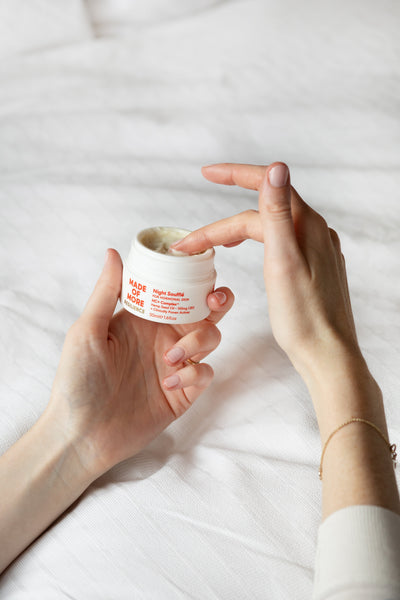
our skin repairs itself most effectively at night. A thicker, more comforting night cream helps replenish what the day has stripped away.
A soft, melting texture sinks in slowly, giving the skin more time to absorb nourishment.
-
Avoid harsh or stripping cleansers
Foaming or high-fragrance cleansers can make winter dryness worse. A gentle, hydrating cleanser keeps the skin clean without removing essential oils.
-
Keep showers warm, not hot
Even a slight reduction in temperature helps protect the natural lipids on the surface of the skin.
-
Use a humidifier
A small rise in humidity has a big impact on moisture retention. Bedrooms and offices benefit the most, as these are spaces where skin stays exposed for long periods.
Why supporting your skin early matters
Once the skin becomes very dry or irritated, it can take weeks to fully rebalance. Supporting your barrier early in the season helps prevent discomfort before it begins.
Your skin is capable of holding moisture beautifully. It simply needs the right environment and a routine that supports its natural structure.