
If you've been buying skincare since your twenties, you've spent thousands of pounds. Then somewhere in your forties the products you trusted stopped working, and the ones you bought to replace them didn't work either. So assuming the next one will fail too isn't cynicism. It's you reading the evidence sitting in your bathroom cabinet.
So I'm not going to tell you this time is different because the packaging is nicer, or because a magazine gave us an award. I want to tell you what actually changed in your skin, why most of what you bought was never designed for it, and how to find out whether we're any better without spending another fortune to learn the answer.
Your skin didn't stop responding. It changed underneath your routine.
Skin is an oestrogen-responsive organ. There are oestrogen receptors in the epidermis and in the dermal fibroblasts that build your collagen, with ER-beta the more widely spread of the two. When oestrogen falls through perimenopause and beyond, the tissue those receptors were looking after changes with it.
The published figures are steeper than most women are ever told:
- Up to 30% of dermal collagen can go in the first five years after menopause
- Another 2.1% a year after that, along with about 1.1% of skin thickness annually
Figures from Rzepecki et al., Estrogen-deficient skin: the role of topical therapy, International Journal of Women's Dermatology, 2019, citing Archer 2012.
That's a structural change in the scaffolding of your skin. It isn't a hydration problem, and no amount of diligence with the wrong cream fixes it. The moisturiser you loved at 32 was made for skin that replaced collagen roughly as fast as it lost it. Yours hasn't been doing that for a while now.
Why the last four things you bought did nothing
Most skincare on the shelf was developed and tested on hormonally stable skin. That's a target market, not a conspiracy, but the consequences land on you in very specific ways.
Fragrance. It's one of the most common causes of allergic contact dermatitis in cosmetics, and skin that's thinned and lost barrier lipids reacts to it far more readily than it used to. A lot of "anti-ageing" skincare is, honestly, drenched in the stuff.
Actives pitched at younger skin. The strength of acid or retinoid that suited you at 30 can leave menopausal skin stinging and red. So you stop using it, and you file it under things that didn't work.
Promises of reversal. Nothing you put on the surface of your face gives you your oestrogen back. Products implying otherwise were always going to let you down, and that repeated letdown is a big part of why you're standing where you're standing.
Routines sold as sets. Buy five products at once and when something helps, you can't tell which one it was. When something stings, you can't tell what to bin.
What "working" should mean now
Here's the reframe that matters more than any ingredient. If you're measuring a product against the skin you had at 35, everything will fail the test. Ours included.
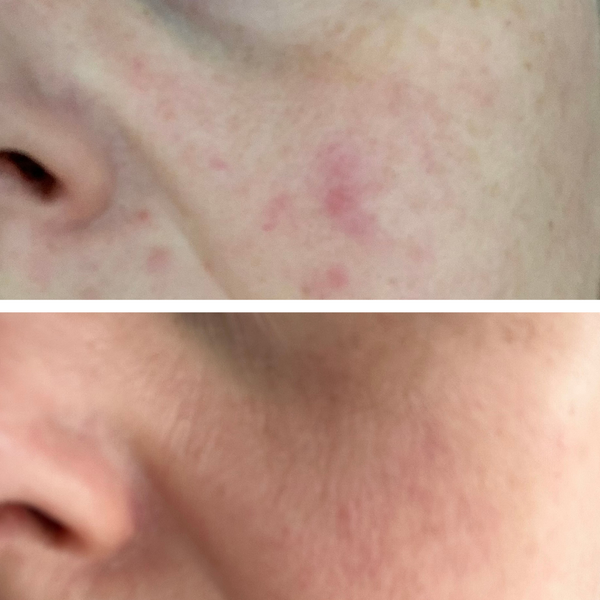
What good formulation can do for menopausal skin is narrower than that, and honestly, a lot more useful. It can rebuild the barrier so water stops escaping and that tight, papery feeling eases. It can calm the reactivity and flushing that arrived with the hormonal shift, so a flare settles in hours instead of days. What it can't do is give you back your oestrogen. Anyone claiming their cream does that is selling you the same disappointment you've already bought several times over.
What we do differently, and where our evidence stops
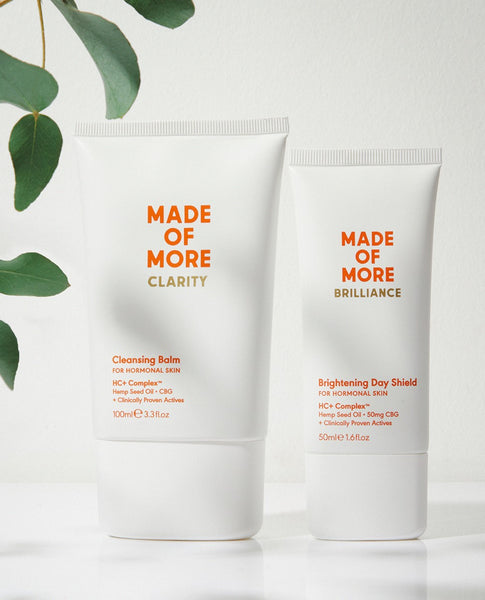
All four of our formulas are built on two hero ingredients: cannabis sativa seed oil, cold-pressed on the regenerative hemp farm I run in Lincolnshire, and cannabigerol, or CBG.
CBG is the bit a sceptical reader should push on hardest, so here's the actual state of the evidence, not the sales version. A 2022 study tested topical CBG in cell and tissue models, then in a 20-person vehicle-controlled trial over two weeks on deliberately irritated skin. It produced a statistically significant improvement in water loss through the skin and in visible redness against placebo, and it dialled down several inflammatory signals more strongly than CBD did.
The limit of that evidence. Twenty people, two weeks, on a CBG preparation, not on our finished products. That's a sound reason to build a formula for reactive midlife skin around CBG. It isn't proof our night cream will change your face, and I'm not going to pretend it is.
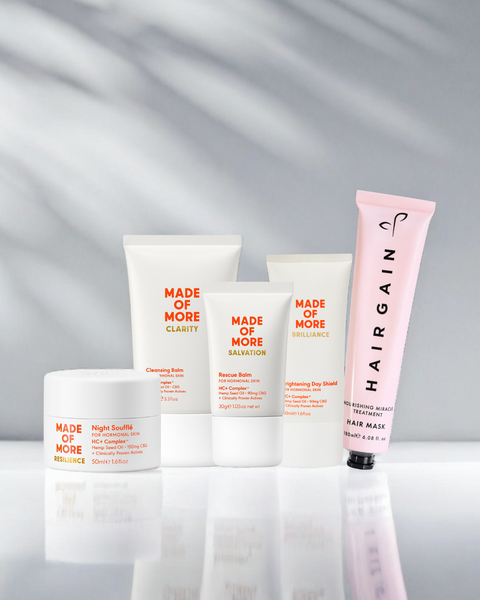
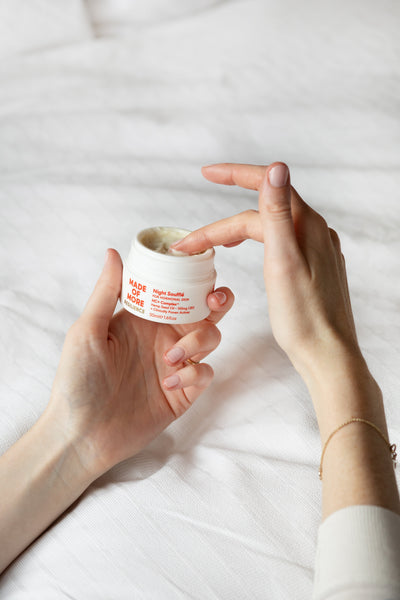
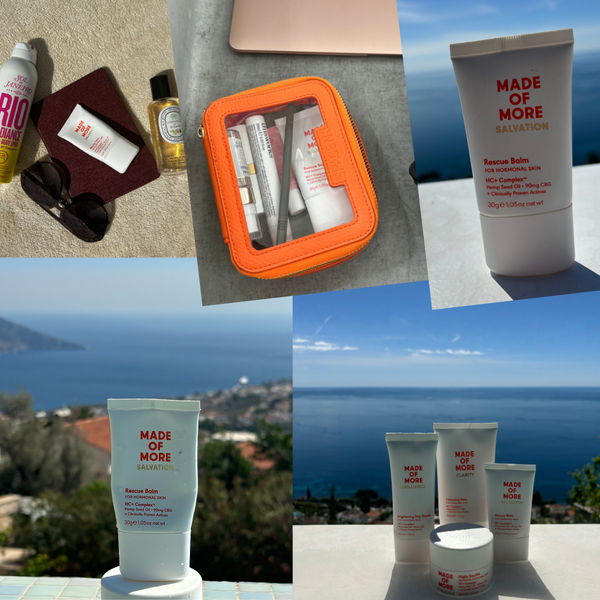
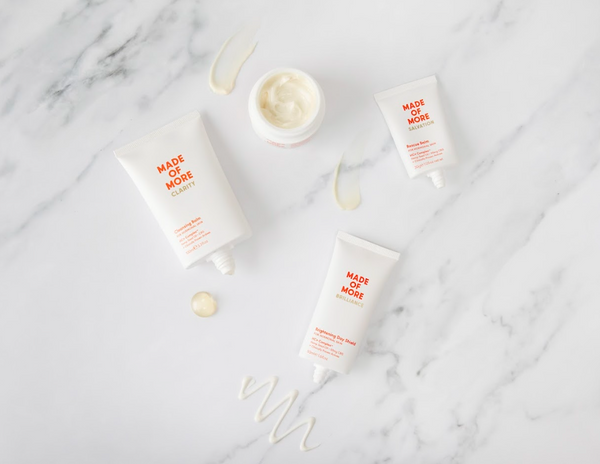
What I can say without hedging is what goes in and what stays out. Every formula is fragrance-free. Salvation Rescue Balm carries 90mg of CBG with ceramides to support the barrier. Resilience Night Souffle is built around lactic acid and peptides behind a ceramide barrier, for overnight comfort. The whole range is Leaping Bunny certified.
How to test us without spending a fortune again
If you take nothing else from this, take this. When you've been burned repeatedly, the right way to try a new skincare brand is not to buy the set.
- Buy one product, not a routine. Salvation Rescue Balm is £35 for 30g. It's our best seller, it holds the Marie Claire award for Best Skincare for Redness, and it'll tell you faster than anything else whether your skin gets on with this chemistry.
- Use it twice a day for four weeks. Put it on the areas that flare and change nothing else in your routine while you do, so you know what caused what.
- Judge it on comfort, not transformation. Does the tightness ease? Does a flare settle faster than it used to? Those are the questions a barrier product should be able to answer in four weeks.
- If the answer's no, stop there. Don't buy the next thing from us hoping. Write to us at hello@madeofmore.co.uk and tell us what happened, because that's genuinely more useful to me than the sale was.
One last thing
You're entitled to be sceptical of us specifically, not just the category. Every brand writing about menopausal skin right now says it understands you, and most of them turned up because the market got interesting, not because they had anything new to formulate.
I'd rather sell you one £35 balm that earns its place on your shelf than a £147 collection that joins the graveyard in your bathroom cabinet. That graveyard is the reason you were about to close this page. Adding to it does neither of us any good.
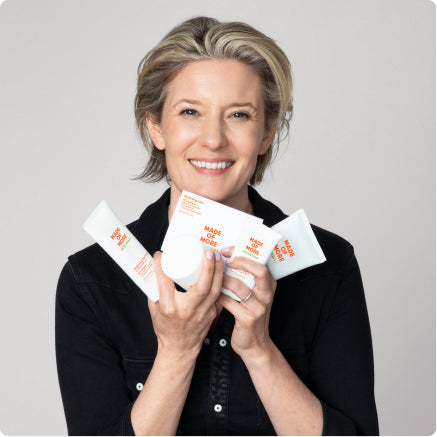
Jackie
Sources
- Rzepecki AK, Murase JE, Juran R, Fabi SG, McLellan BN. Estrogen-deficient skin: the role of topical therapy. International Journal of Women's Dermatology, 2019. Link
- Perez E, et al. In Vitro and Clinical Evaluation of Cannabigerol (CBG) Produced via Yeast Biosynthesis. Molecules, 2022. Link
- Fragrance Contact Allergy: A Review Focusing on Patch Testing. 2024. Link